In early February, I had the privilege of co-organizing Dagstuhl Seminar 26062: Connected Space, Challenges and Opportunities in Satellite Computing and Networking at the renowned Schloss Dagstuhl, Leibniz Center for Informatics in Germany. I organized the seminar together with Brandon Lucia (Carnegie Mellon University), Paulo Mendes (Airbus), and Nishanth Sastry (University of Surrey). Over four intensive days, a carefully curated group of 28 researchers, industry practitioners, and policy experts from across the globe gathered to tackle one of the most consequential questions in modern networking. The group spanned the full stack of the problem, from physical layer communications and orbital dynamics through transport protocols and application design, all the way to regulation and global policy. The central question that brought us together was both simple and enormous. How do we build, secure, and govern the rapidly expanding infrastructure of satellite-based computing and communication?
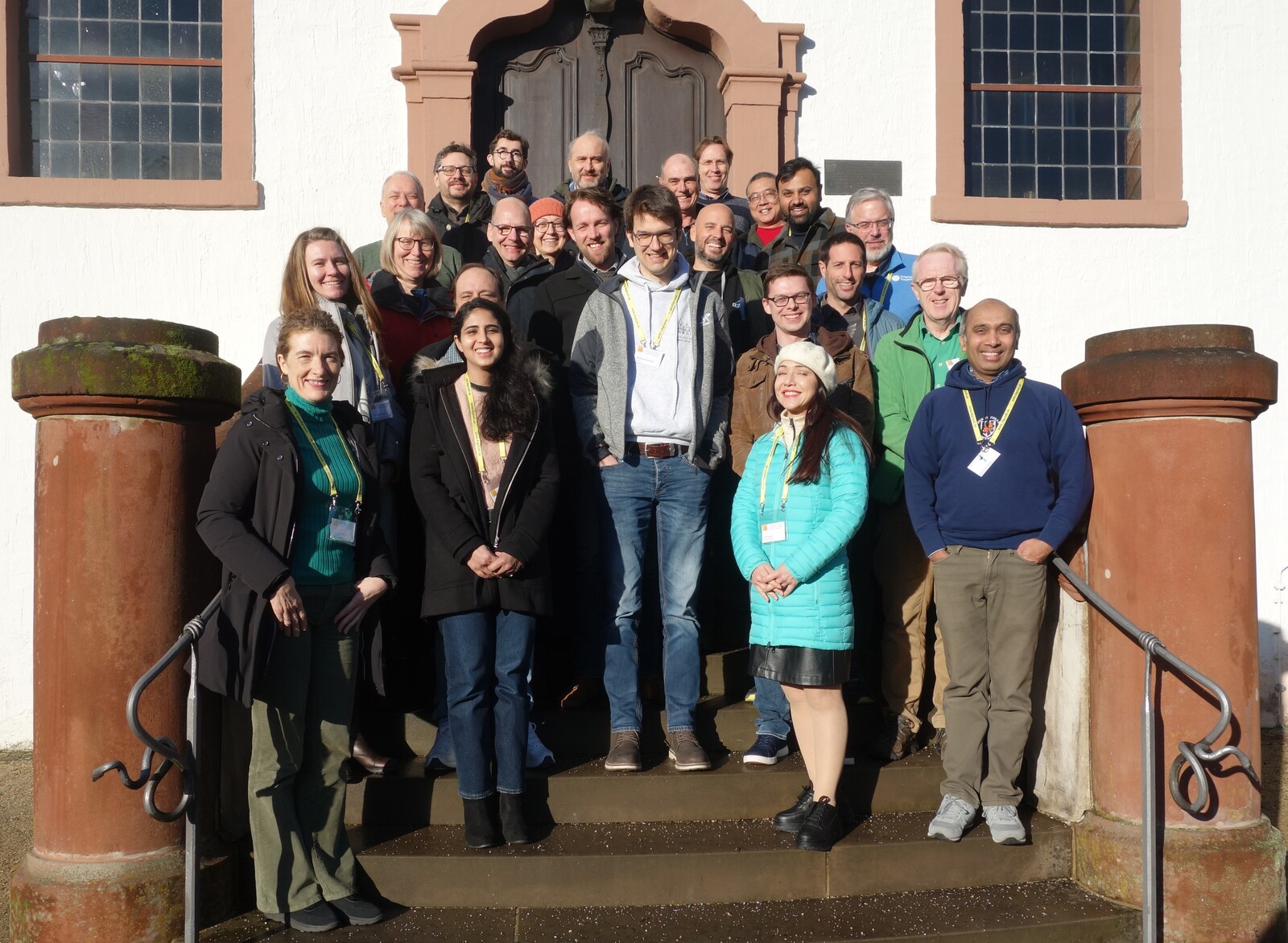
Participants of Dagstuhl Seminar 26062 at Schloss Dagstuhl, February 2026.
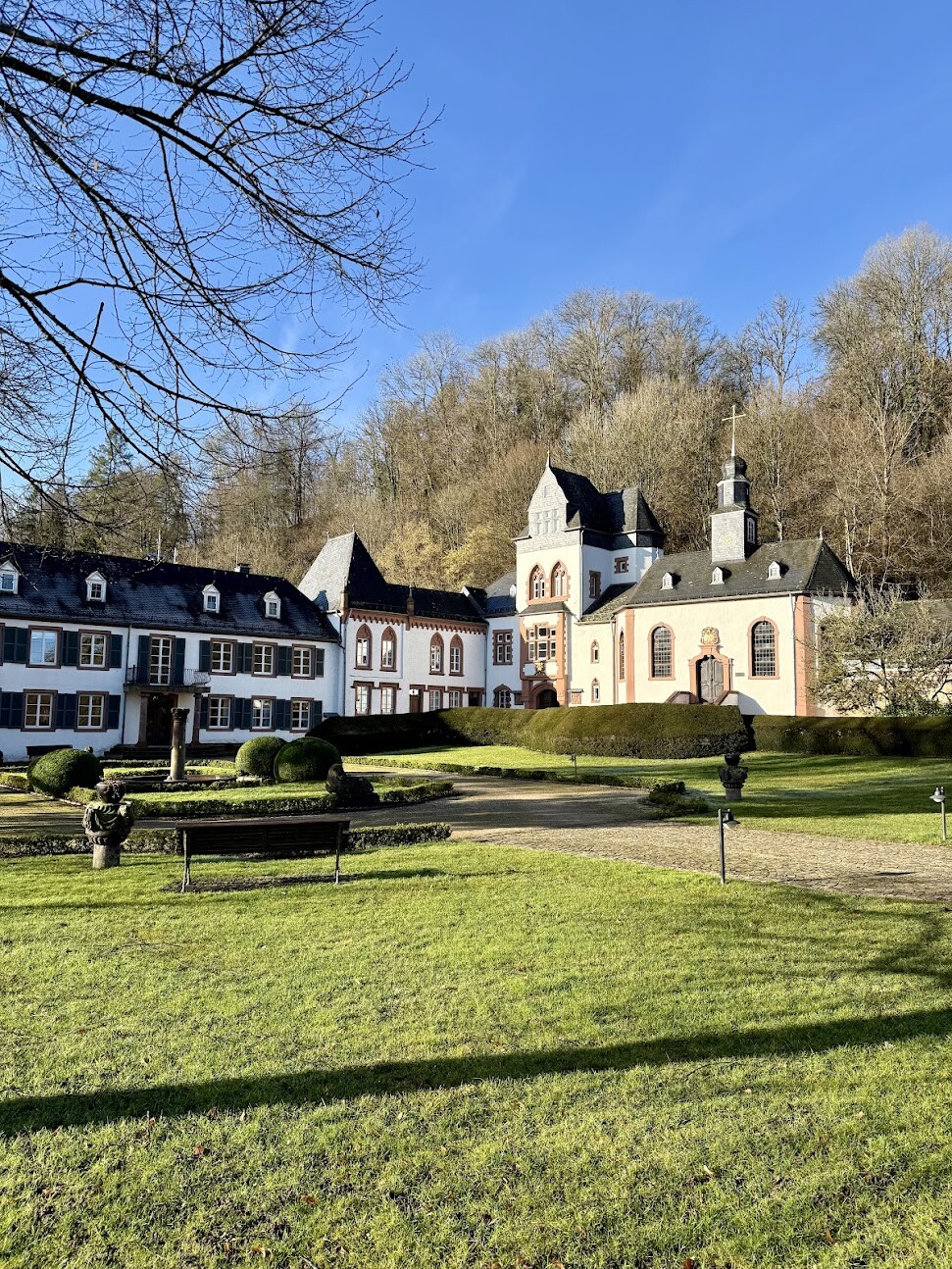
Schloss Dagstuhl – Leibniz Center for Informatics, the venue for Seminar 26062.
Why This Seminar, Why Now?
The timing could not have been more fitting. The satellite networking landscape has undergone a dramatic transformation in just a few years. LEO mega-constellations like Starlink and OneWeb have moved from ambitious proposals to operational realities serving millions of users worldwide. Companies are filing for tens of thousands of additional satellites, including direct-to-cell capabilities that promise to connect unmodified smartphones anywhere on the planet. At the same time, deep space operations are entering a new era, with international efforts like LunarNet laying the groundwork for sustained communication and computing infrastructure around the Moon and eventually Mars. The question of how to build, secure, and interconnect networks that span everything from handheld devices on Earth to rovers on another planet has never been more pressing.
Yet for all this momentum, the research community has been largely working in silos. Networking researchers focus on protocols and performance. Space engineers optimize link budgets and orbital mechanics. Security experts worry about attack surfaces, and policy analysts grapple with spectrum allocation and data sovereignty. What was missing was a venue that brought all of these perspectives together in one room, with enough time and intellectual freedom to find the connections between them. That is precisely what Dagstuhl seminars are designed to do, and this one delivered.
The Dagstuhl format is uniquely suited to this kind of interdisciplinary work. Rather than a traditional conference with back-to-back presentations, the seminar alternated between short groundwork talks that set the stage and extended breakout sessions where small groups dug into specific problems. Each breakout culminated in a whiteboard presentation to the full group, followed by open discussion. This structure meant that by the end of the three working days, ideas had been challenged, refined, and stress-tested from multiple angles.
What We Discussed
The seminar was organized around five thematic sessions covering the breadth of the connected space problem.
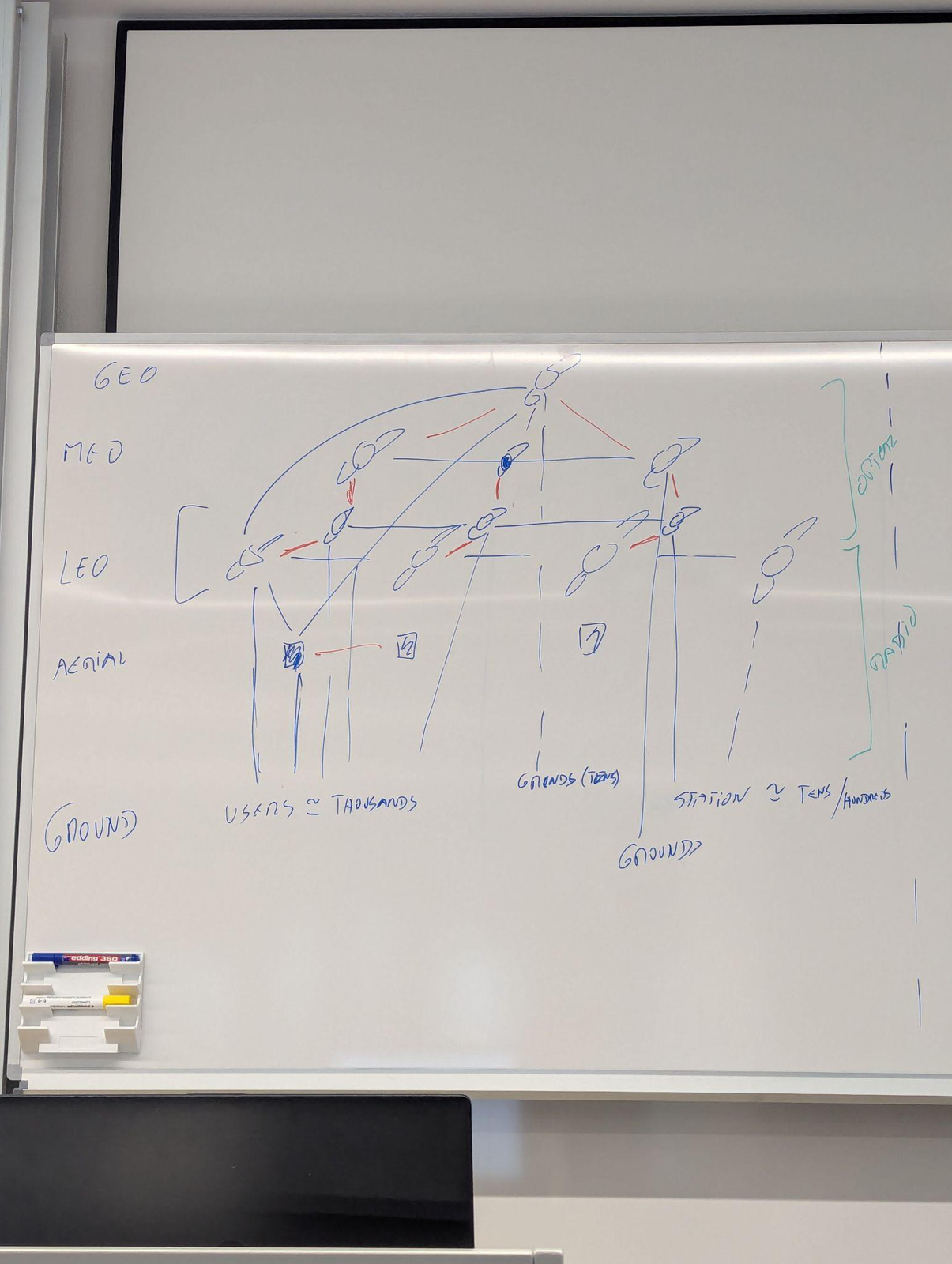
The "Dagstuhl Vision on Connected Space" whiteboard, capturing the layered architecture from GEO through LEO to ground, with the interconnections and open questions that drove the seminar's discussions.
Session 1 laid the architectural foundations by examining non-terrestrial networking and the challenges of building networks that span multiple orbital layers, from LEO through MEO to GEO, and extending all the way to deep space operations around the Moon and Mars. A key early decision was that the seminar would not limit itself to LEO, but would consider the full continuum of connected space, including high-altitude platforms, lunar relay networks, and interplanetary links. The discussions quickly converged on a question that would recur throughout the seminar: how should these networks be organized, and who controls what?
Session 2 explored the use cases that motivate this entire endeavor. The group mapped out a rich landscape of applications ranging from direct-to-cell connectivity and space-based IoT to Earth observation, emergency response, and even privacy-preserving communication. A recurring theme was the distinction between use cases where space systems offer a genuine and unique advantage versus those where the hype may be outpacing the engineering reality.
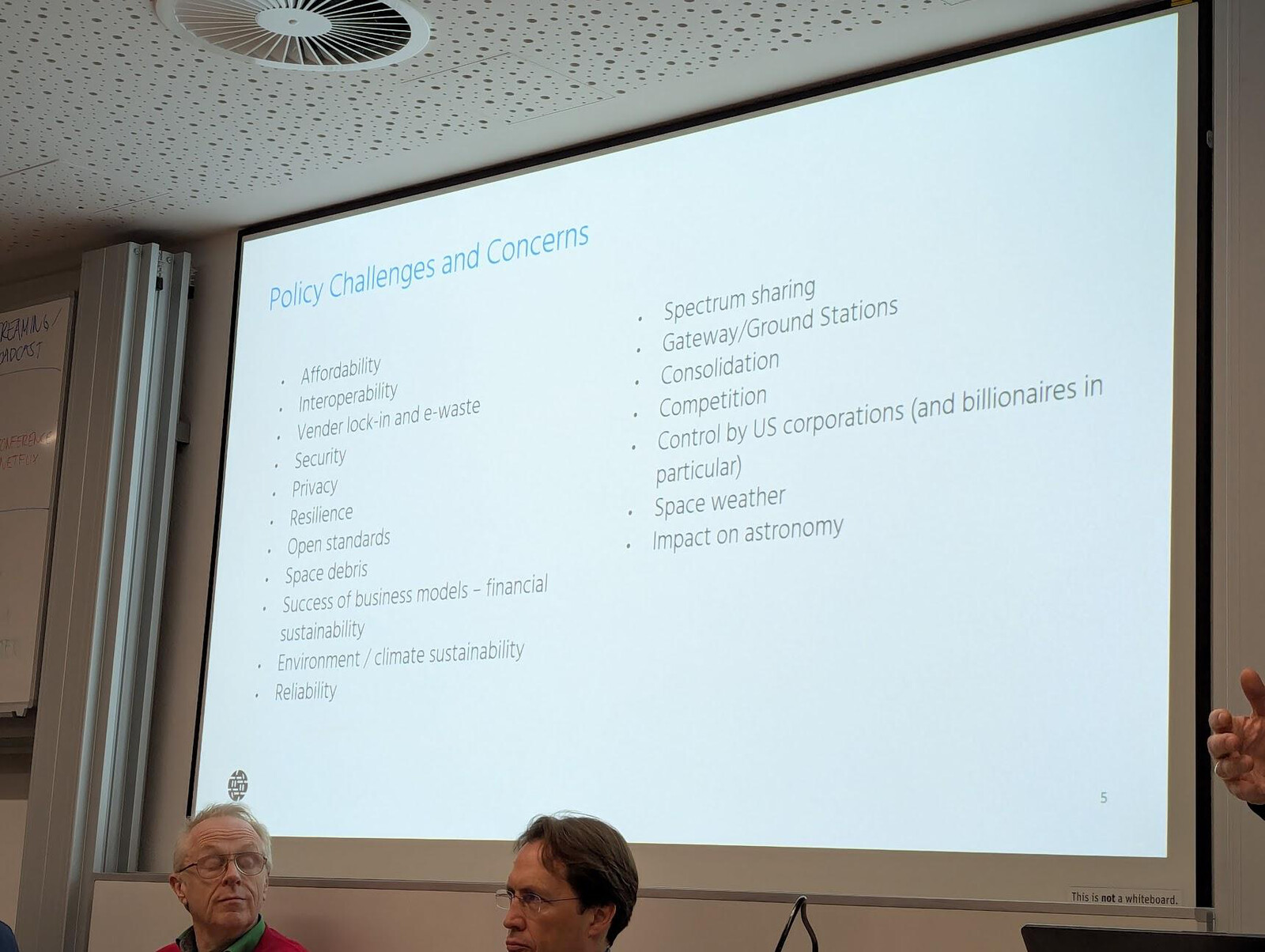
Session 3 tackled the intertwined challenges of interoperability, security, regulation, and policy. This session featured perspectives from standards bodies, space agencies, and Internet governance organizations, producing some of the most spirited debates of the entire seminar. Questions of spectrum allocation, data sovereignty, and the risk of a fragmented "splinternet" in space proved to be far more nuanced than any single discipline can address alone.
Session 4 dove directly into what is arguably the hottest and most contested topic in the satellite industry right now: space computing. The timing was remarkable, as SpaceX had just filed with the FCC to deploy up to one million satellites as part of an "orbital data center" vision, and companies like Google (Project Suncatcher) and Starcloud were pursuing similar ambitions. The panel, featuring experts from NASA JPL, Carnegie Mellon, and UPC Barcelona, brought rigorous engineering analysis to bear on these bold claims. The discussions examined the fundamental physics and constraints of computing in orbit, from power dissipation and uplink capacity to hardware resilience and radiation effects. Crucially, the group considered the full spectrum of space computing, not just LEO orbital edge but also deep space scenarios where autonomous rovers on Mars generate far more data than they can ever transmit home. Use cases ranged from Earth observation data triage and autonomous deep space operations to the more provocative proposals for space-based AI inference and content delivery networks, with the group developing a clear-eyed assessment of which scenarios genuinely benefit from in-orbit computation and which do not survive first-principles scrutiny.
Session 5 on the final day synthesized the findings into a roadmap of challenges and opportunities, identifying concrete next steps for the community.
Key Takeaways (Without Spoilers)
A full Dagstuhl Report will be published in the coming months through the Dagstuhl Reports series (DROPS), so I will not give away the detailed findings here. But I can share a few high-level observations that give a sense of the seminar's intellectual trajectory.
First, a unifying architectural concept emerged independently across multiple breakout groups. Different teams working on different problems, from routing to security to federation, converged on the same organizing principle. This kind of spontaneous convergence across disciplinary boundaries is rare and is exactly the kind of outcome that makes Dagstuhl seminars special.
Second, the group developed a much more nuanced view of space computing than what dominates the current discourse around orbital data centers. Against the backdrop of bold industry claims, the participants brought rigorous back-of-the-envelope calculations and first-principles engineering analysis to bear on the question. They identified clear categories of applications where in-orbit computation is genuinely transformative, particularly for data that is generated in space and for deep space operations, but they were equally precise about the scenarios where the physics simply does not cooperate. The resulting framework for thinking about "when does compute belong in space?" is, I believe, one of the most valuable outputs of the seminar for the broader community.
Third, security emerged as a foundational challenge that cannot be bolted on after the fact. The current approaches to securing space communications do not scale to the mega-constellation era, and the transition to new cryptographic paradigms must happen before the systems that need them are fully deployed. The group mapped out specific architectural directions for addressing this gap.
Fourth, the seminar highlighted that policy and technology cannot be separated in this domain. Regulatory decisions about spectrum, sovereignty, and market structure will shape the technical architecture of space networks just as profoundly as any protocol design choice. Several participants from the policy world brought perspectives that fundamentally reframed how the technical participants thought about their own research problems.
What Comes Next
The seminar produced a clear set of follow-up activities. Beyond the official Dagstuhl Report, the group is actively working on a Dagstuhl Vision for Connected Space, a community article that will lay out the shared research agenda that emerged from our discussions. This vision document aims to provide a roadmap for the field, grounded in the cross-disciplinary perspective that the seminar uniquely enabled, and we plan to release it as a resource for the broader networking and space systems communities.
Several collaborative papers are also in preparation, with participants committed to co-authoring work that spans the themes we explored. The group identified relevant upcoming venues including workshops at ACM SIGCOMM, IEEE ICC, EuCNC, and TMA 2026 (which SPEAR Lab is hosting in Delft this year), and engagement with standards bodies including the IETF Space Research Group.
Perhaps most importantly, the seminar created a community. Before Dagstuhl, many of us were working on overlapping problems without knowing it. Now there is a shared vocabulary, a shared understanding of the open challenges, and a network of collaborators spanning academia, industry, space agencies, and policy organizations across multiple continents. A follow-up Dagstuhl seminar is already being planned.
Acknowledgments
I want to thank my fellow organizers Brandon, Paulo, and Nishanth for the months of preparation that went into making this seminar happen. Thanks also to the staff at Schloss Dagstuhl for providing the ideal environment for this kind of deep, focused intellectual work. Most of all, thanks to every participant who contributed their expertise, their questions, and their willingness to step outside their comfort zone and engage with perspectives from other disciplines. The quality of the discussions was extraordinary, and I am excited about where this community will go from here.
The full Dagstuhl Report will be published in Dagstuhl Reports (DROPS) later this year, and the Dagstuhl Vision for Connected Space article will follow. Stay tuned for both.
Nitinder Mohan is a tenured Assistant Professor at TU Delft, where he leads the SPEAR Lab. His research focuses on edge computing, satellite network measurement, and next-generation Internet protocols.