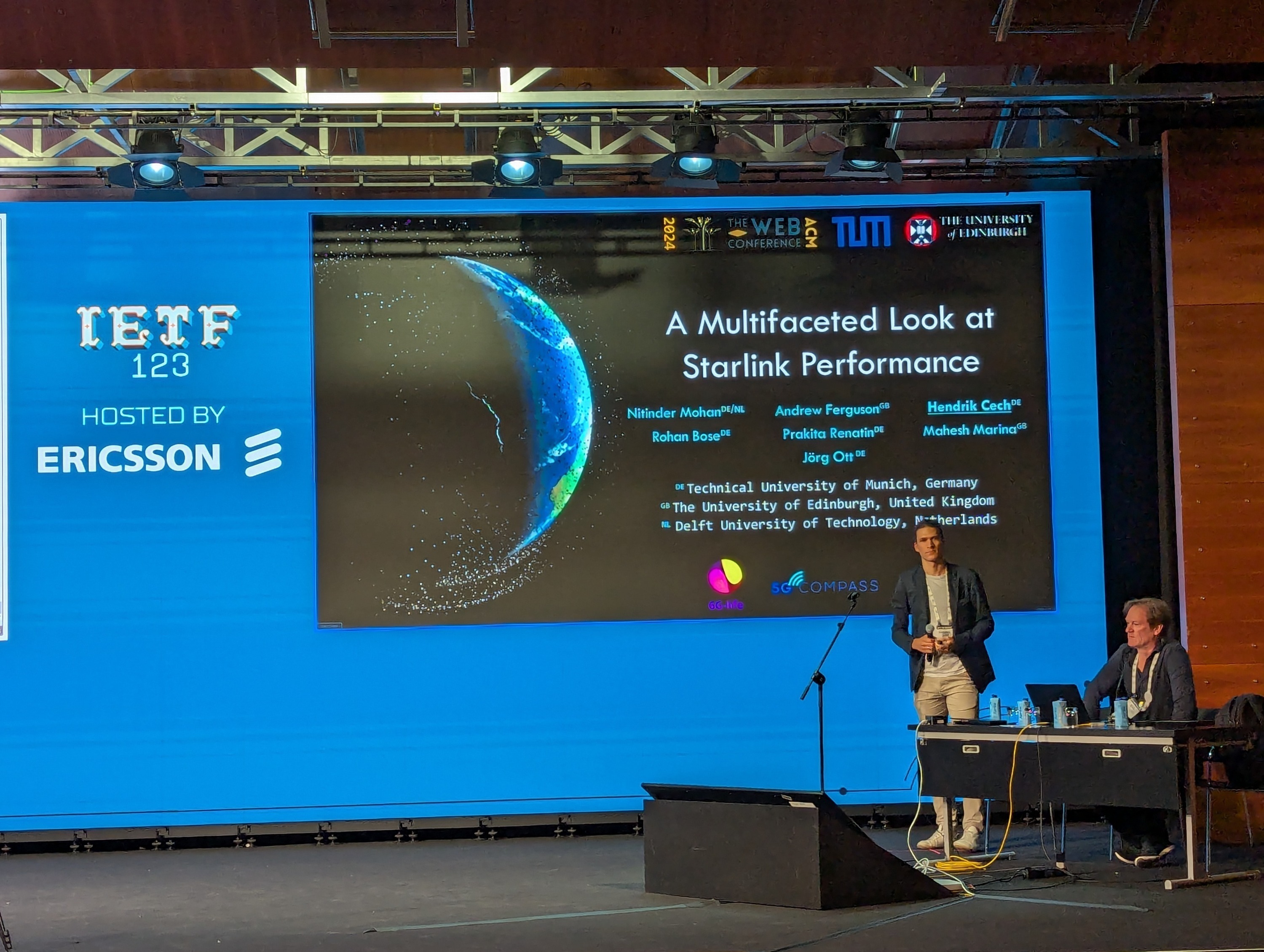


Low Earth Orbit satellite constellations are transforming global Internet connectivity by providing access to underserved regions where terrestrial infrastructure is impractical or uneconomical. LEO satellites orbit at 500-1,200 km altitude, enabling much lower latency than traditional geostationary satellites, but introduce new challenges: satellites move rapidly relative to ground users, requiring frequent handovers; inter-satellite links create dynamic mesh network topologies; and performance varies significantly with geographic location and ground station proximity. Traditional Internet protocols and content delivery network architectures assume relatively static network topology and stable end-to-end paths—assumptions that break down with LEO satellites. Understanding actual performance characteristics through comprehensive measurement is essential to inform protocol design, optimize content delivery strategies, and guide deployment decisions as these constellations scale to tens of thousands of satellites providing global coverage.
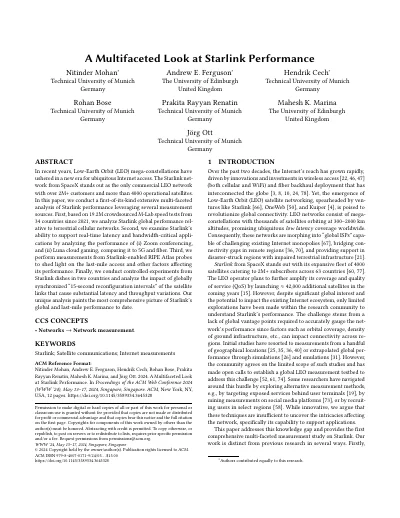
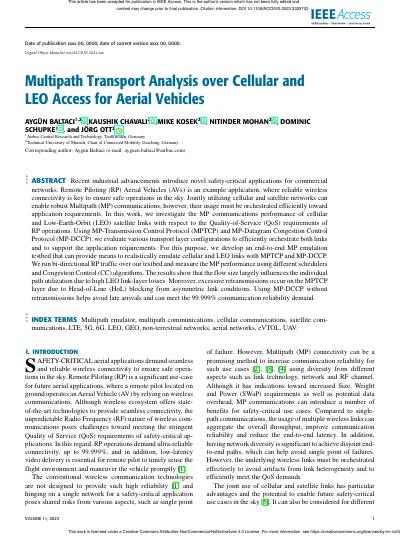
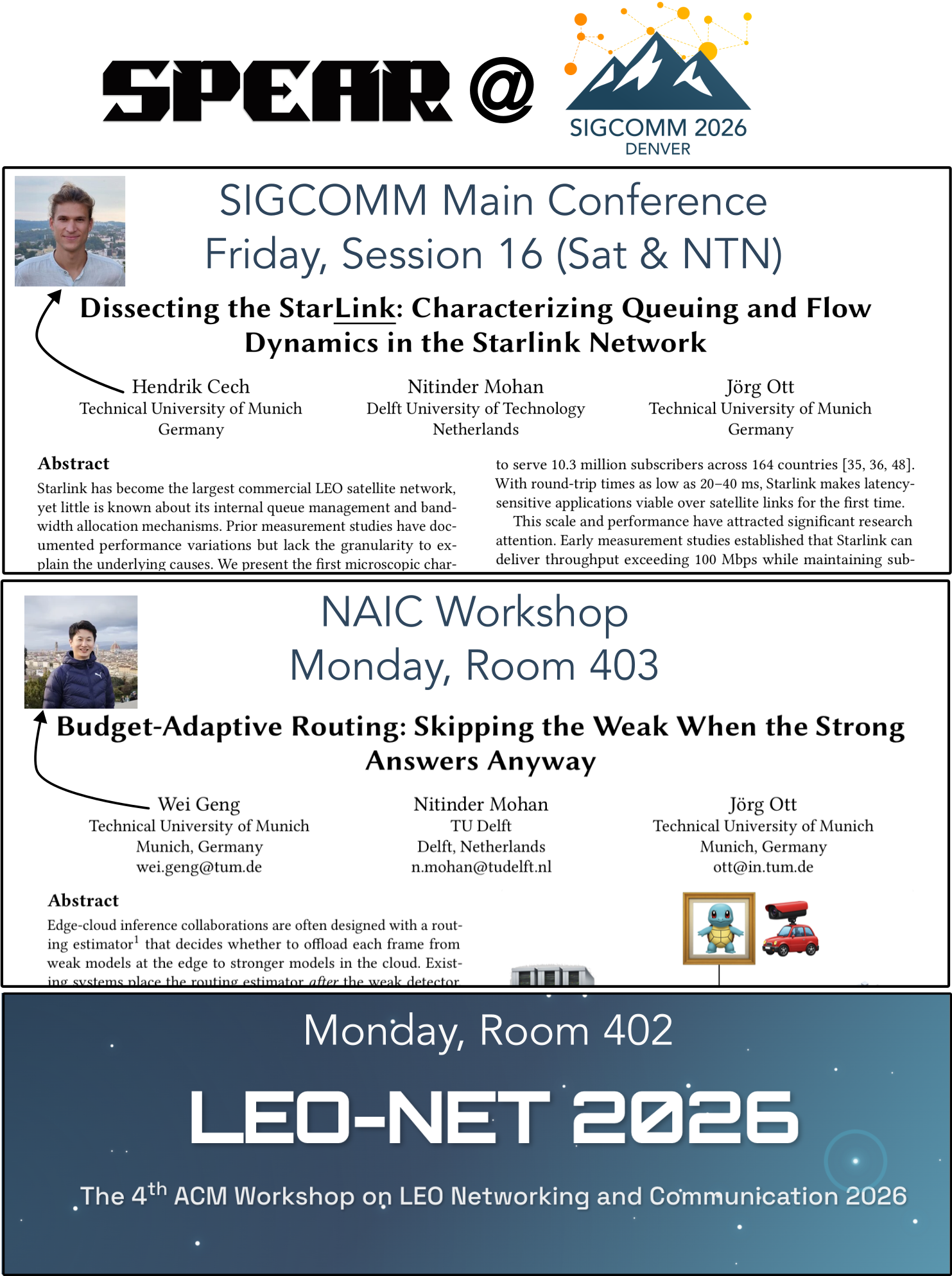
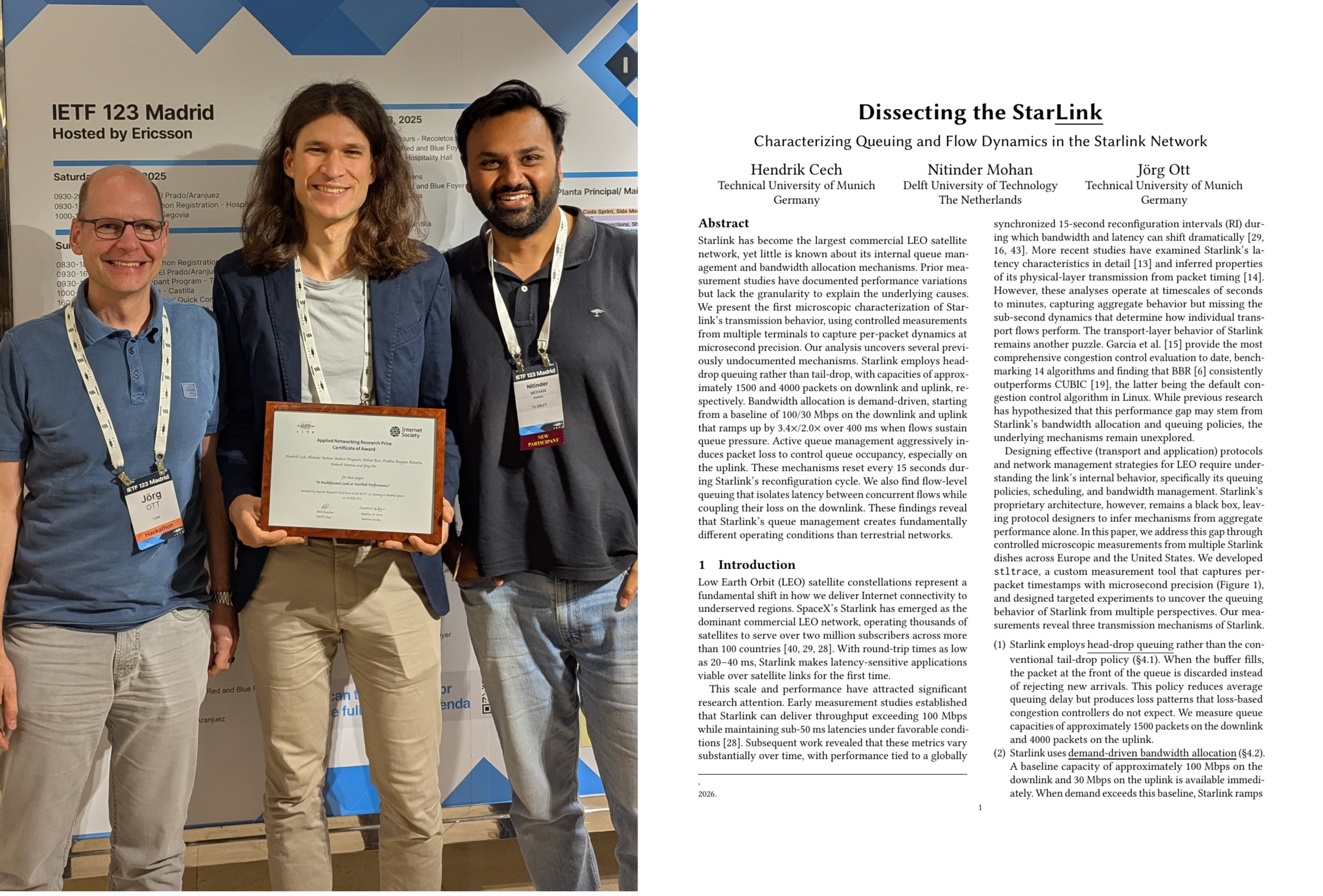
Our research conducts large-scale measurements of LEO satellite networks across diverse geographic regions spanning multiple continents, characterizing latency, throughput, and reliability under varying conditions. We analyze how transport protocols behave over satellite links, discovering performance differences compared to terrestrial networks and identifying optimization opportunities. Our measurements reveal fundamental differences in content delivery patterns—satellites function as natural cache points, creating what we term "CDN in the sky" behavior where caching strategies and routing policies differ markedly from terrestrial CDNs. We explore satellite-terrestrial hybrid architectures and multipath transport protocols that enable intelligent path selection and bandwidth aggregation across both network types. Our measurement infrastructure combines global probe networks, custom instrumentation, and crowdsourced browser-based tools. This work, recognized with the IETF/IRTF Applied Networking Research Prize, informs standards discussions at IETF and 3GPP, and our open datasets and tools enable reproducible research by the broader community. Ongoing research addresses seamless mobility and handover management, intelligent caching strategies, security across satellite-terrestrial boundaries, and integration with next-generation cellular infrastructure.
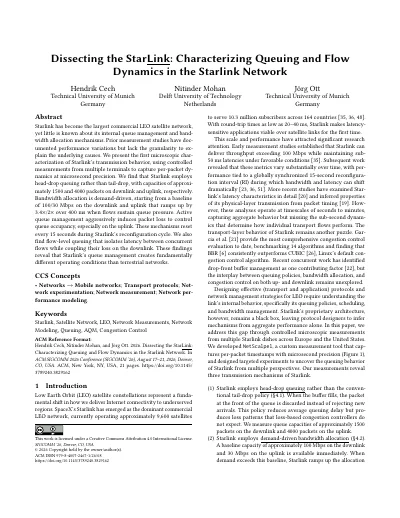
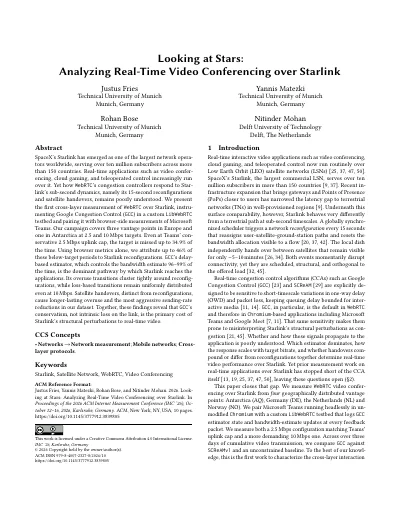
![[Poster] Twinkle, Twinkle, Streaming Star: Illuminating CDN Performance over Starlink](/images/publications/2024/leoCDN_IMC2024_poster-thumb.webp)
![[Poster] Starlink Performance from Different Perspectives](/images/publications/2024/starlink_mobicom24poster-thumb.webp)